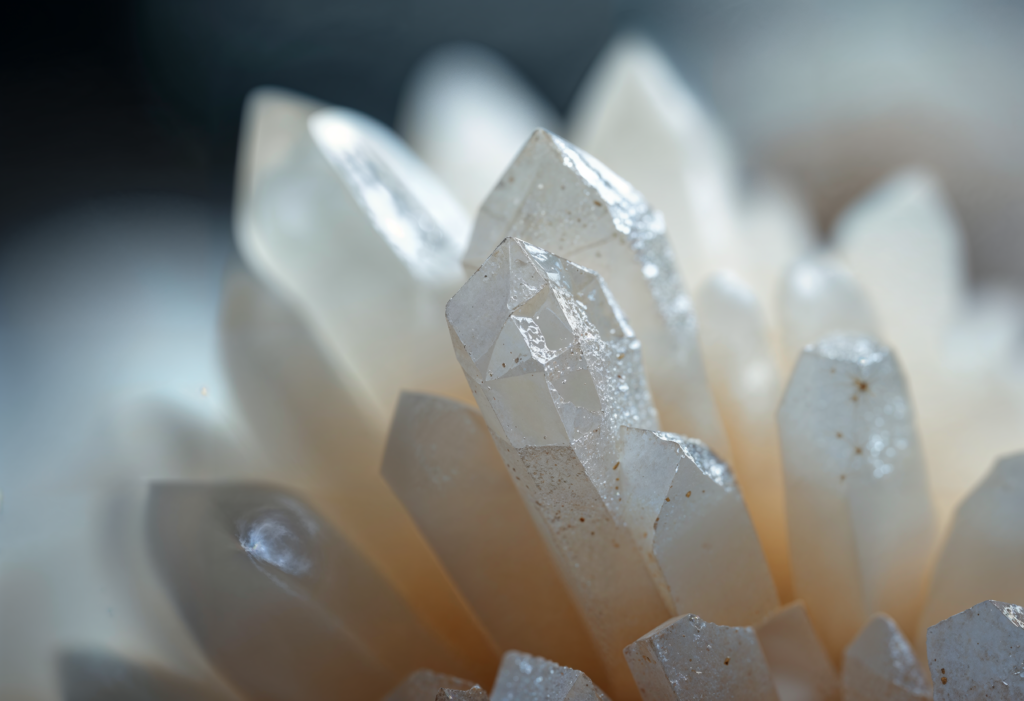
Students investigate how atomic arrangement influences the visible structure of crystals. They grow sodium borate (borax) crystals and observe repeating patterns to explore the concept of crystalline lattices and unit cells. Students then examine how scientists determine crystal structures using X-ray diffraction, including analyzing a diffraction pattern and applying Bragg’s Law to calculate lattice spacing. Through these activities, students connect macroscopic crystal shapes to microscopic atomic structure and bonding.
2 Class Periods (180 minutes)
This resource can be used alongside the Semiconductors as Photocatalysts lesson.
Grade Levels: 9-12
Educational Standards
NGSS:
HS-PS1-1; HS-PS1-3; HS-PS2-6; HS-PS4-5
Topics: Chemistry, Materials Science, Physical Science, Structure of Matter
Contributor: Kirstin Blase, Villa Duchesne Upper School
Acknowledgements: The contents of this curriculum were co-developed with Principal Investigator Professor Bryce Sadtler in Chemistry at WashU and funded by a grant from the National Science Foundation (Imaging Nanoscale Heterogeneity in Single-Atom Catalysts with Single-Molecule Fluorescence Microscopy; Chemical Measurement & Imaging, Macromolec/Supramolec/Nano MPS CHE-2404415). These contents do not necessarily represent the policies of the National Science Foundation, and you should not assume endorsement by the federal government.