When she boarded the airplane to attend a National Association of Biology Teachers (NABT) Conference in St. Louis last October, Beth Cates had no idea that she’d be using containers from her toiletry kit to bring living, single-celled organisms called Tetrahymena all the way back to California, but that’s exactly how it went down.
“I’d never seen or heard of Tetrahymena,” says Cates, who teaches AP Biology and 8th Grade Integrated Science at Western Sierra Collegiate Academy, a charter school drawing students from 16 counties in the Sacramento, California area. “My students love working with microscopes, but it’s hard to find lessons that are rigorous enough or set up for using them in a hands-on way.”
Cates stopped by a demonstration session featuring ASSET (Advancing Secondary Science Education through Tetrahymena), an NIH SEPA-funded outreach program that offers a variety of modular science education materials designed to stimulate, hands-on, inquiry-based learning of fundamental biological concepts. Developed at Cornell University, the program transitioned to Washington University in St. Louis in 2023. It was just what Cates was looking for– something she could implement easily, and right away.
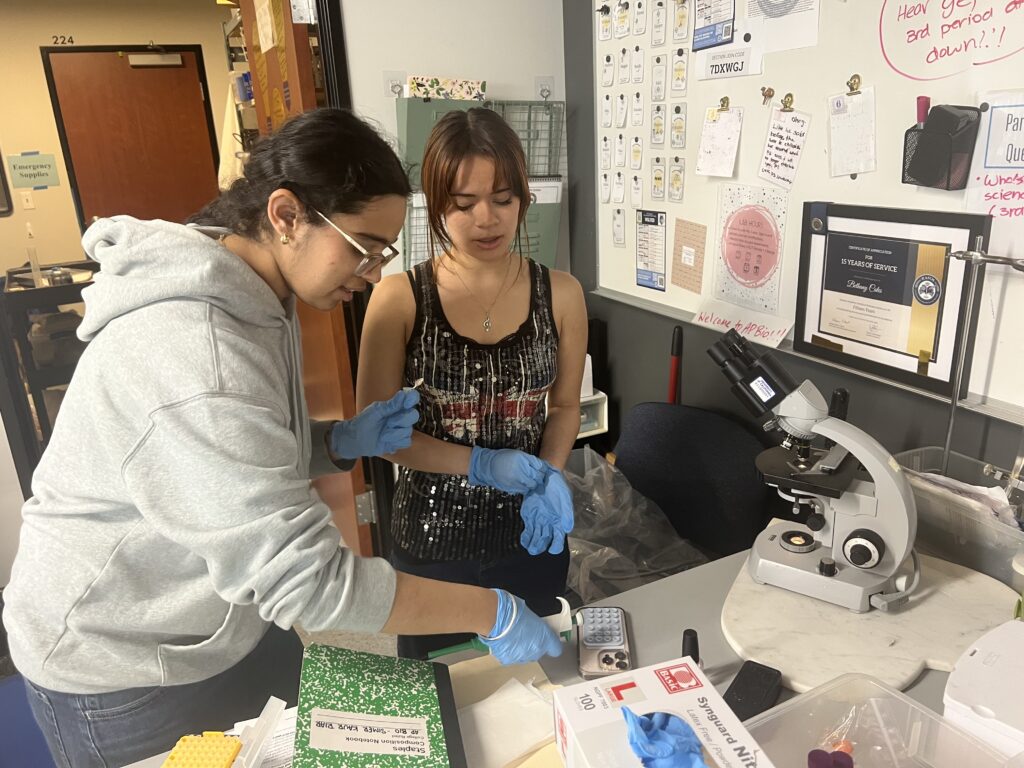
“The team had the stations set up so teachers could do the lab and see how to set it up. I could take some time to actually see the Tetrahymena. It was great to have someone point out what we were looking at!”
Cates’ enthusiasm didn’t go unnoticed. Her mother, a science teacher from Kansas, met her at the conference.
“My mom is a fantastic teacher and she has an ability to make friends with everyone,” says Cates. “It was Mom who wondered about the possibility of taking some Tetrahymena home with me. I wouldn’t have asked about it, but Mom said, ‘I’m going to ask real quick.’ I’m so grateful she did that!”
The answer was yes, and together with the ASSET team, they figured out a way to make the transport happen so that Cates could finish the newly-enhanced lab on osmosis in her classroom. The Tetrahymena survived the trip.
“It was so cool to have something that students can understand as a cell and an organism simultaneously,”
Beth Cates, biology teacher
Western Sierra Collegiate Academy
“It can be difficult to bridge that gap. Getting to do a lab that touches all aspects of biology, from molecular to cellular to figuring out where organisms fit within the food chain (ecosystem biology) also helps us revisit why scientists use model organisms in the first place.”
Giving students opportunities to build confidence using microscopes is an added bonus.
“Using a microscope is a physical skill and it takes practice. Students need time and someone to guide them toward an aha moment where they can actually see what’s there. That’s one of the most fun things about teaching biology. It’s never finished! The research is ongoing, but we can introduce students to the edge of what we know. We don’t have enough students that get to feel those edges, to get to the place where they can look at the world around us, interact, and learn something new.”
Inviting students to engage in authentic scientific discovery
Alexandra Forgerson doesn’t need any convincing that using models like Tetrahymena in the classroom is a good idea for teachers, students and science.
“It makes the abstract really concrete, and it also helps teachers be more ambitious about science learning,” Forgerson says. “When you have students learning how to use microscopes to understand a science concept, maybe they feel invited into the discovery a little sooner. Maybe they are building capacity and belief in themselves sooner.”
An instructional specialist with WashU’s Institute for School Partnership (ISP), Forgerson is a key member of the team that collaborates with university faculty, scientists, and K-12 educators, supporting the co-creation of resources and learning opportunities that invite all learners to participate in authentic research experiences. ASSET is one of those programs.
“Bright young learners are eager to engage with science, but too few teachers have the scientific materials and tools needed to nurture the next generation of innovators,” she says. “The ASSET program meets this pressing need.”
The program provides free, classroom-ready science modules that are rooted in real biomedical research. This includes 30+ life and health science modules for K-12, learning experiences developed by WashU’s leading scientists and educational experts, and tested curriculum and science kits that have been shipped to 41 states, reaching over 76,000 students.
The ASSET Team is led by Professor Doug Chalker, WashU Biology, director of the NIH-funded Tetrahymena Stock Center. An expert in Tetrahymena-based research, Chalker leverages the ISP’s STEM education expertise and trusted relationships with educators across the St. Louis region to expand the program’s reach.
“The ISP team has deep relationships with teachers, and we’re able to leverage their connections in ways that really make a difference for the bridges we’re trying to build between young learners and STEM careers,” Chalker says. “They also understand in a granular way how work in research can be adapted to the classroom. We’ve been able to leverage this unique combination of expertise and reputation to recruit local teachers who can contribute to our efforts to make a difference in real classrooms with real students.”
Since ASSET was transferred to WashU in 2023, the number of students engaged in the program has increased by 20 percent nationally and 241 percent regionally. WashU’s ASSET Team credits the successful scaling to impact more students to the collaborative model for curriculum development that the ISP uses across its programs. At the heart of it is authentic engagement with teachers as researchers.
“Teachers know best,” says ISP Executive Director Victoria May. “The teachers with whom we partner are experts. They know their students and the unique challenges within their classrooms, schools, and districts. Engaging teachers to co-develop the modules that are meant to be used by teaching peers is the best way to provide a curriculum that really does bridge classroom learning directly to real scientific research.”
Teachers participating in the co-development and revisions of ASSET modules are also invited to co-host workshops on WashU’s campus, and engage in practitioner-focused conferences that offer lab-based experiences of the modules.
With years of experience wearing a teaching hat, Forgerson understands that ambitious science teaching and learning requires a confidence that is best built by making it accessible.
“By providing certain support and access to more complex scientific inquiry, you can really build up students and the teachers as well,” she adds. “We’re building capacity and confidence, using a lot of visuals, step-by-step lab instructions, even color-coded videos that are designed to invite teachers to realize, “I can do this!’”
Being “wowed” by science
To get young learners interested in science, Anne Deken knows that her own curiosity has to stay piqued as well.
“It’s easy for teachers to get siloed,” says Deken, who teaches seventh grade Earth and Life Science, as well as ninth grade Biology at John Burroughs School, a college preparatory school in St. Louis. “It’s important to stay connected to what’s happening in the bigger world out there. I feel like when I’m teaching, I can say, “Oh, when I was doing this … .in a lab.’ Telling students that real people are doing these things every day helps. It’s not too early to start talking about career paths, giving them an idea of what’s realistic.”
With 15+ years of experience teaching and four years working with the ASSET program, she’s no stranger to lab settings, but admits she was “wowed” last summer as she worked with the team to test and refine what will be the most ambitious ASSET module yet. Focused on ecology, the module will feature three optional phases of increasingly complex inquiry.
Phase One gives students an opportunity to capture cells in water samples and determine why some water sources have Tetrahymena and others don’t. Last summer, Deken started by taking samples at Burroughs and in Forest Park, and tried to keep them alive all summer. She worked with seventh graders to test if they could use a golf ball retriever with a baggy attached to the end of it to collect water samples in specialized traps. It worked.
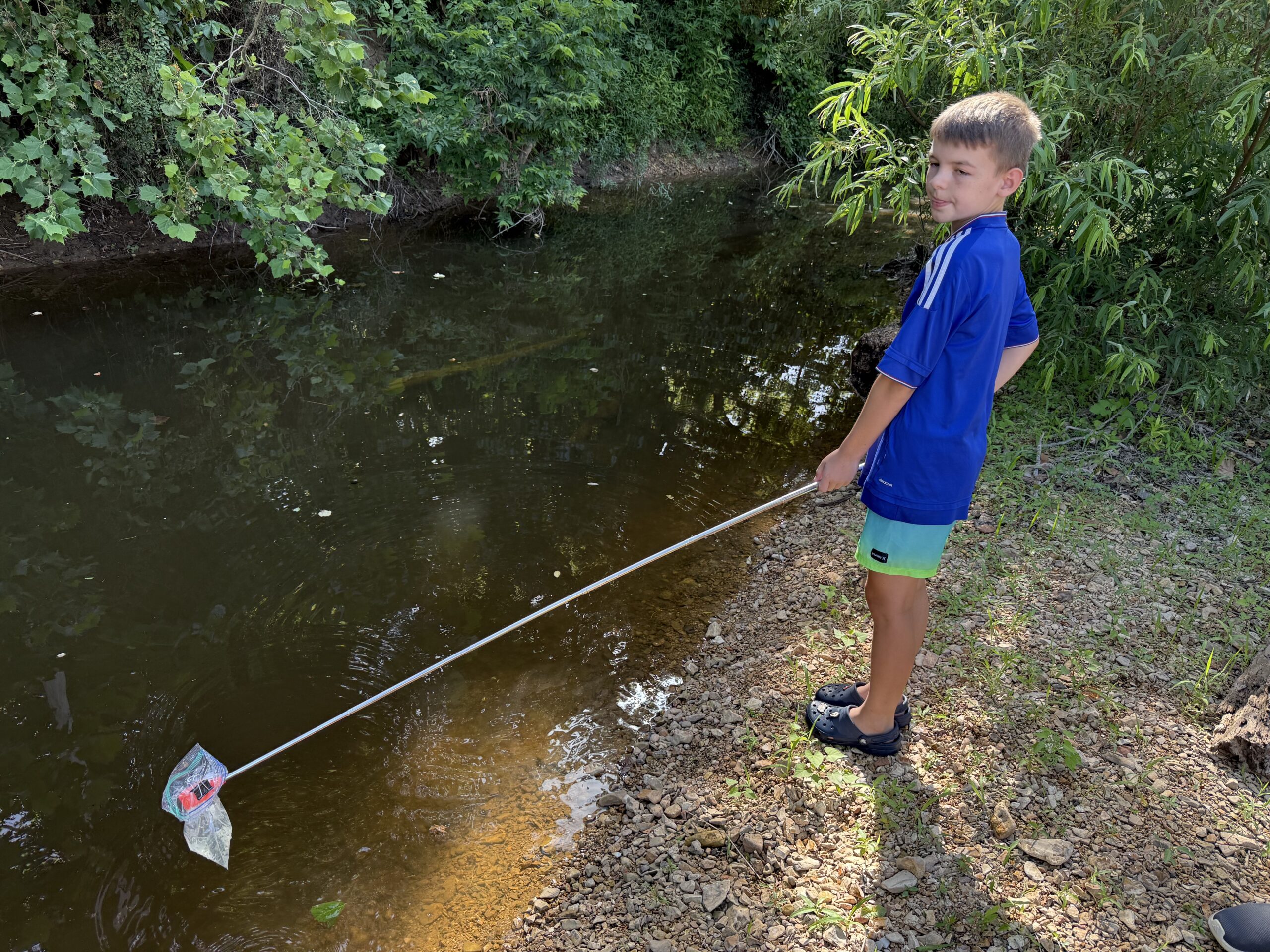
“The samples they got over the summer were great. We got all kinds of stuff,” says Deken. “You could really work with younger students for this one, and use it to talk about protists. What would you find in a pond? If you have this body of water, what can you learn about it? Find out what is in your own backyard.”
Although the module was originally written to have students collect samples and mail them to the lab for the results, Deken and the rest of the ASSET team saw more potential.
“You could still mail them into the lab if you wanted to, especially for younger students or if you don’t have the equipment,” says Deken. “Teachers can stop there if they want, or move to a second phase, which engages students in running a polymerase chain reaction (PCR), a laboratory technique used to amplify specific segments of DNA.
The hardest part for developing Phase Two, Deken says, was identifying the right protocol, one that’s reliable, user-friendly, and accessible.
“Most schools don’t own PCR machines, but ASSET is working on a protocol for mixing the samples and a heating and cooling cycle to get the sequence data at the end.
Phase Three pushes learners to identify the species using data from Phase Two.
“I was intrigued by the whole sequencing idea,” says Deken. “The fact that I was able to do it and realized that my students could, too, was really exciting. This was an exploration outside of my wheelhouse, but Alex really encouraged me.”
For testing and refining the entire three-part module to make it more consistent with ASSET modules and visuals, Deken and Forgerson partnered with David Ganey, a science teacher at Maplewood Richmond Heights High School and Riley Sabath, a senior conducting her own independent research on water quality. She’s headed to Saint Mary-of-the-Woods College, in Indiana to play soccer and study Zoology.
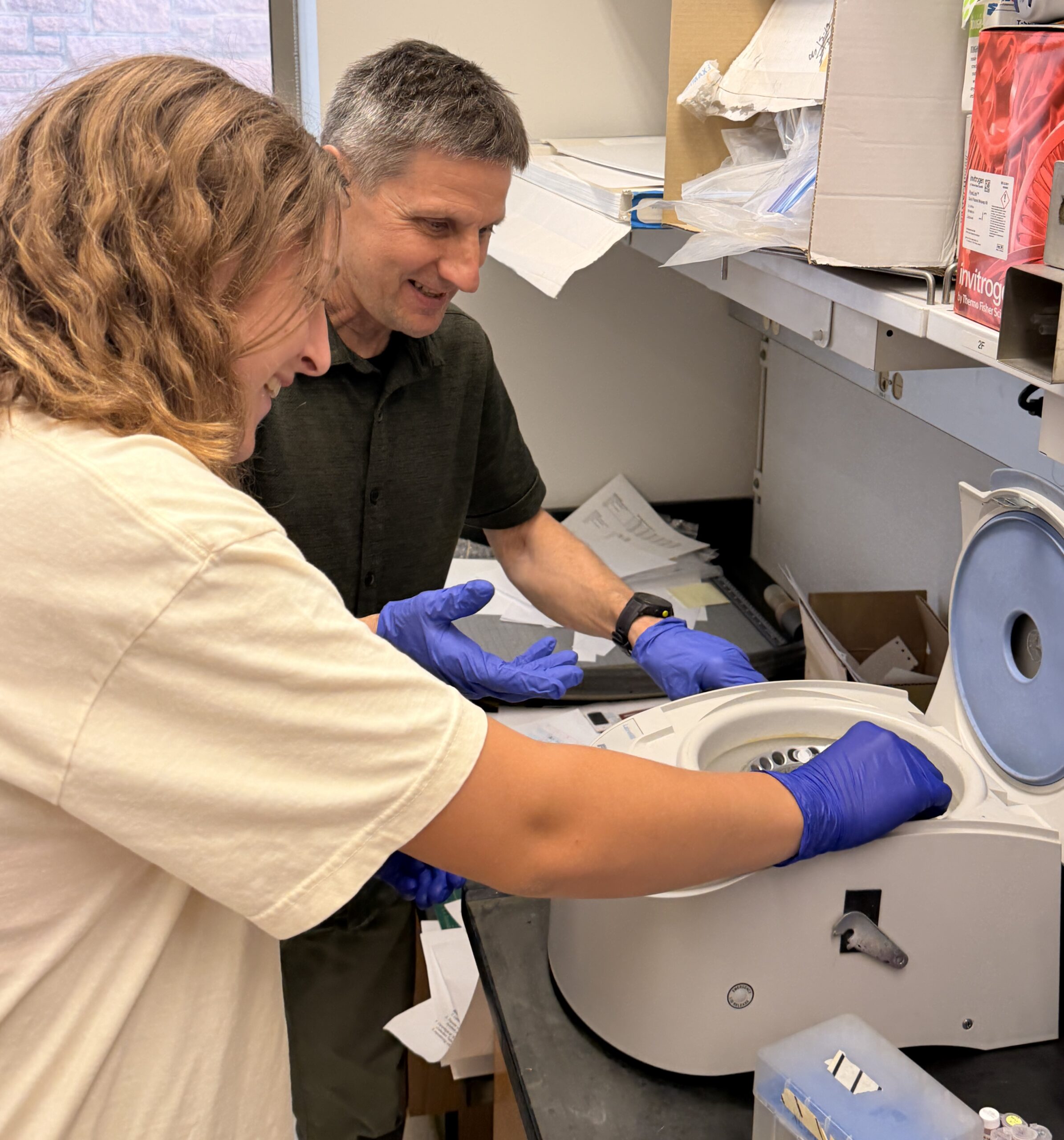
“I have always loved animals and water, and I know there has to be a way I can do this work and be outside. I don’t want to be stuck at a computer,” says Sabath, who has worked with Forgerson to implement the curriculum that Deken developed last summer through the ASSET program. She collected water from two ponds in Forest Park, and Deer Creek. Independently, she was trying to see how different levels of PH affect populations of Tetrahymena. For ASSET, she helped the team test all three phases of the new module.
“I had no idea how many steps there were! It wasn’t just looking in a microscope. It was really cool to see the different steps and actually do them. With the gels, you could actually see things changing. I was able to make some suggestions on how the team could make the modules easier to understand.”
Piloting the ASSET modules, Sabath says, definitely spurred thinking about what kinds of problems she wants to help solve when she’s a scientist.
“Let’s say an animal is acting differently, but we’re not sure why. Is there a way to look at the DNA in their cells to help us identify what’s causing that? Are there big things just as challenging as cancer that we could tackle?”
Learn more about ASSET.