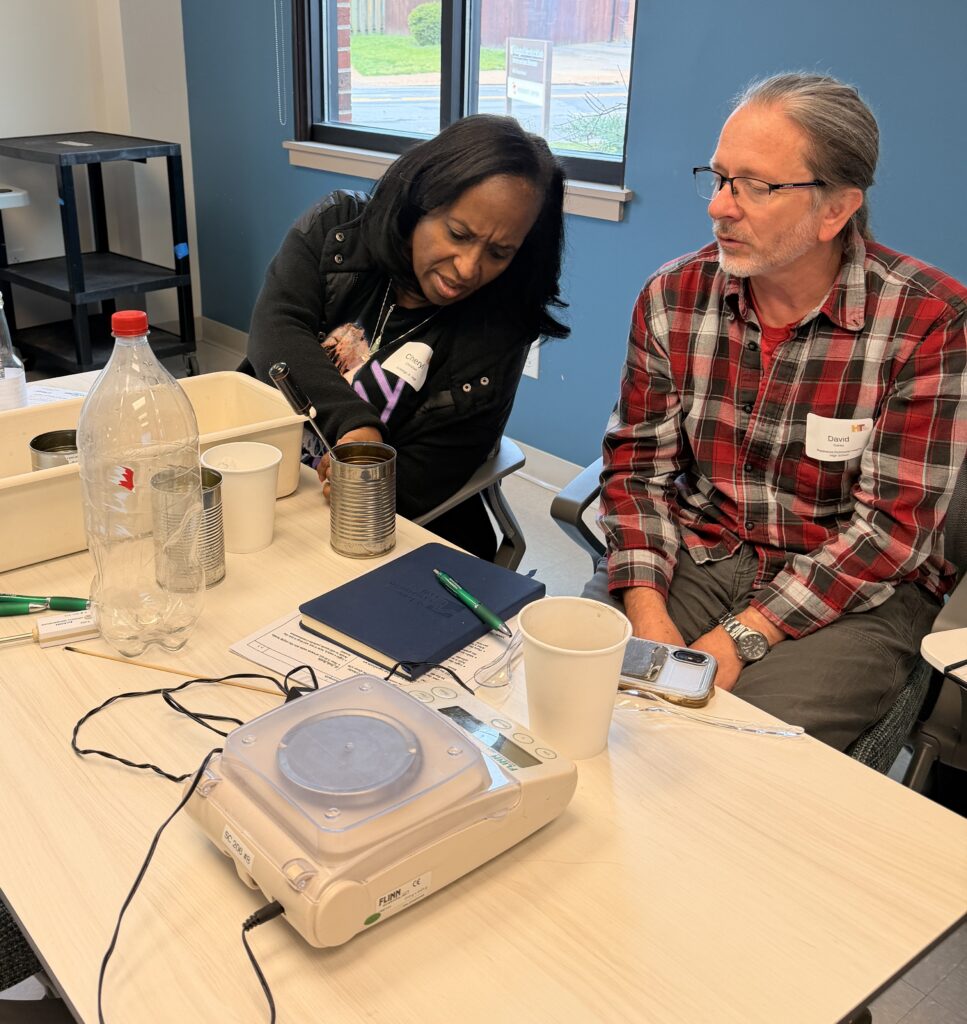
David Ganey was hiking in the Australian Outback after a day of trying to avoid crocodiles when he saw something in the sky so extraordinary that it prompted him to make a career out of teaching.
“I finally found a spot where I could get into the water, so I’m sitting in this pool watching a waterfall, and the moon started to turn red,” recalls Ganey. “It was a full lunar eclipse. I was able to see an unparalleled view of the stars in the southern hemisphere, stars I had never seen before. I was just in the right place at the right time. I just got lucky, but I realized that if I’d been taught about it, I could have planned to be there. I decided I was going to be a teacher and teach from a perspective that acknowledges there are things we need to know, but also things we really want to know.”
The stars seem to have been aligned before that moment as well, as Ganey made his way toward his career as a science educator.
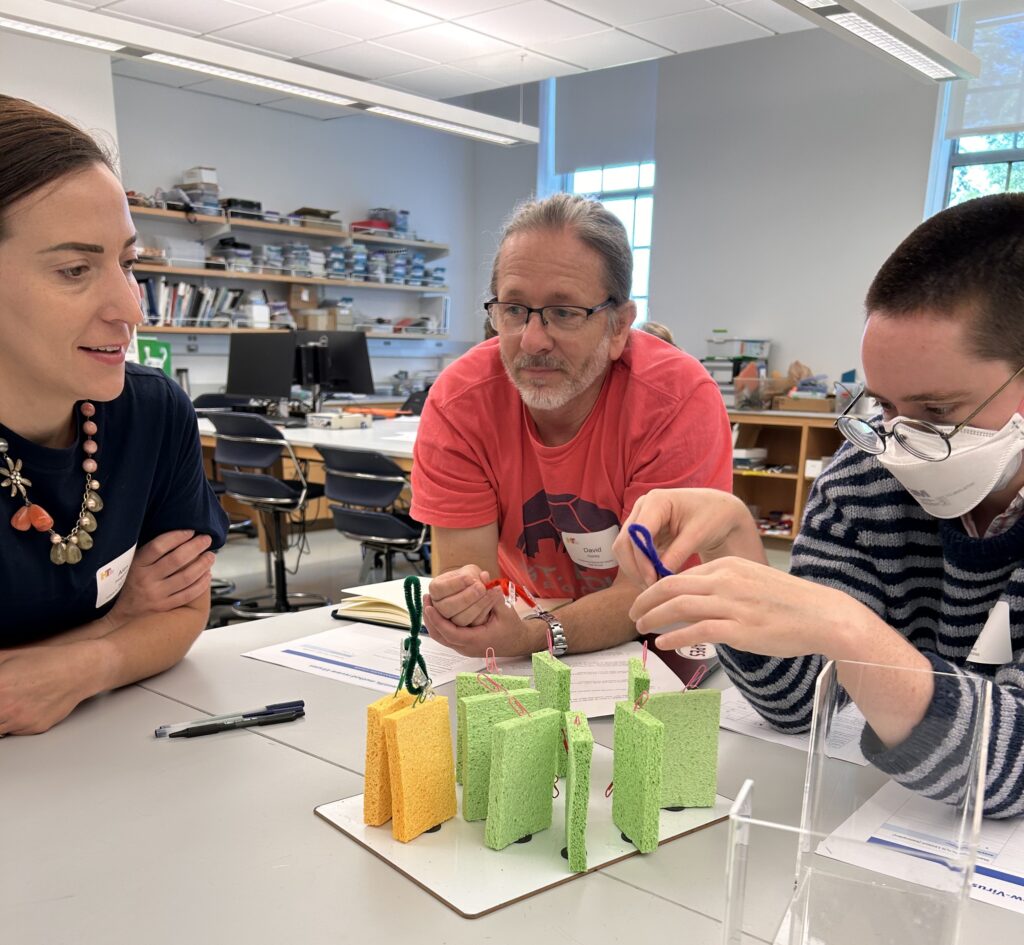
Ganey had recently finished a master’s degree in Biology with an emphasis in Behavioral Ecology, and was doing a fellowship in Israel, working with researchers Joel Brown, Burt Kotler and Amos Bouskila investigating tradeoffs of food and safety. As the Israel project was about to conclude, Ganey was invited to join Brown and Kotler for another research project in Africa. The grant funding was withheld by Congress, leaving Ganey in need of a job for a year. He called his parents. They had recently bumped into his former wrestling coach at Helias High School in Jefferson City, Missouri. The coach happened to be looking for someone who could be a science teacher and a wrestling coach at the school. Ganey took on the role for one year, and really enjoyed it.
The funding for the research fellowship in Africa was released, and off Ganey went. The pivotal trip to the Outback followed that.
By 1999, Ganey was back at Helias teaching Biology. In 2006, he joined the staff at Jefferson City High School, where he taught Astronomy in addition to Biology, Earth Science, AP/Dual Credit Biology, Environmental Science and Geoscience. During that time, he began working with Life Sciences for a Global Community, the ISP’s Masters in Biology. He was named Jefferson City School District Teacher of the Year in 2012.
Ganey moved to the St. Louis region in 2021 to begin his current role at Maplewood- Richmond Heights High School, where he’s been recognized for a second time as the High School Teacher of the Year in 2026. He also just received the National Association of Biology Teachers Outstanding Biology Teacher Award for the State of Missouri. Ganey teaches a full range of rigorous science courses, including AP Biology, AP Environmental Science, Human Body Systems, Exploring Environmental Sustainability and an independent science research course.
“I’ve taught every science class but chemistry,” Ganey says. “But I’m not passionate about chemistry. To be a good teacher, regardless of your content area, you need to be passionate about the content, and to care about kids. And for me, as a science teacher, it’s really important that students don’t see science as something stagnant and old. Science is vibrant and continually changing, and to keep up with that constant change, I have to be a lifelong learner.”
Bridging real-world science and classroom learning
Making science really come alive for students requires demonstrating how it impacts the world around them.
“Kids love controversy. Sometimes those controversial things aren’t in the news, but making students aware of a specific dilemma or challenge pulls them in,” says Ganey, who knows from experience that high school students in his classes tend to be really interested in learning about a phenomenon called dicambic drift. It’s the movement of a herbicide that effectively kills weeds, but also drifts into fields where we don’t want it to go, causing damage to adjacent crops and natural habitats.
“I get lots of questions on lessons like this. The current event tied to science content causes students to go into a direction that they care about.”
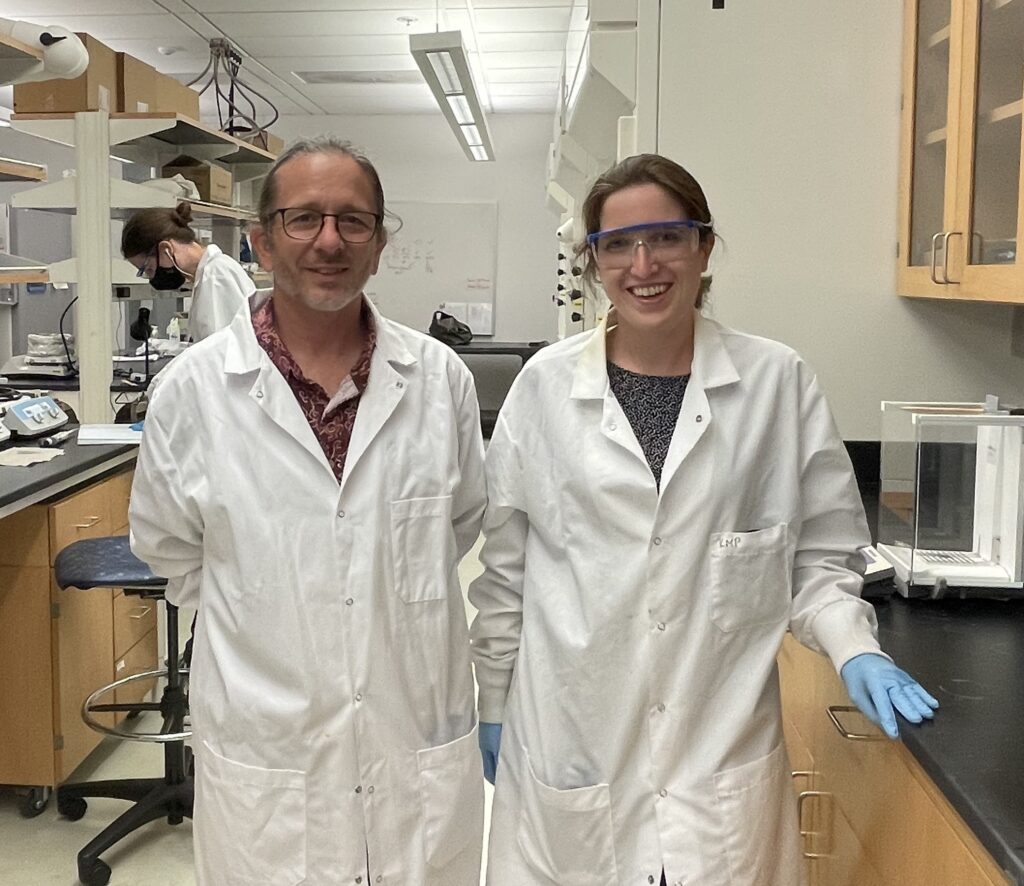
Ganey’s specific knowledge of dicambic drift was a result of working with Kimberly Parker, associate professor of energy, environmental & chemical engineering in the McKelvey School of Engineering at WashU. The two worked together in 2022 in Parker’s lab through the Summer Teacher Researcher Program. Administered by the WashU’s Institute for School Partnership (ISP), the program is designed specifically to provide opportunities for faculty to connect in meaningful ways with K-12 educators in the broader community.
Ganey, who has also recently partnered with Marcus Foston, another WashU professor of energy, environmental and chemical engineering, says deepening his interactions with faculty, peer teachers and staff at the ISP has really helped him grow as a teacher and connect his students directly to research.
“I’ve had kids come in saying that they liked nature, or that plants are cool,” he adds. “Helping them see you can transition a like or a passion into a career is really fun.”
Riley Sabath, a student in his independent research class last year, really wanted to study marine biology, but through Ganey’s connections with the ISP, was able to work with WashU’s ASSET Team, led by Professor Doug Chalker, an expert in Tetrahymena-based research.
“Here in Missouri, we’re landlocked, but the ISP connections allowed her to look at an aquatic system and see how that could impact an entire ecosystem. Marine biology is just a bigger aquatic system,” adds Ganey.
A learning curve that curves in all directions
Faculty and staff who have the opportunity to connect with teachers from across the region though the ISP agree that they, too, are learning and growing. Kimberly Parker noticed Ganey’s enthusiasm and expertise right away.
“David has so much knowledge about the art and science of teaching,” Parker says. “I thought, ‘Wow! I could work with him and also learn from him!’ When I started to teach at WashU, I had lesson plans and knew what I was going to cover over the course of a semester, but there’s a different way of teaching that I hadn’t encountered until I started working with David. It’s much more exploratory. I think what I was doing before was more of a performance, and it seemed like he was doing more riffing, like stand-up comedy or improvisation.
Working with David has helped me start taking more risks in my own teaching. In engineering classes, we are teaching within a series of constraints and expectations because there are standards that students are expected to learn. You have to hit those marks. I’ve learned from David how to hit the marks, but still have open-ended inquiry.”
Kimberly Parker, associate professor of energy, environmental & chemical engineering in the McKelvey School of Engineering at WashU.
Observing and working directly with Ganey has strengthened Marcus Foston’s ability to connect with learners of all ages, as well. In addition to teaching undergraduate and graduate engineering students, Foston has long collaborated with the ISP to bring middle school students into his lab for Researcher for a Day experiences.
“David has been a really good resource coming into our lab and doing things with students that can translate into something that can be hands-on or inspirational with the material,” says Foston. “We’re educating a newer generation of students, and these students need context. You have to tell them why something is important. Today’s students need that to engage in the material. In the individual classes, it’s the student’s job to get that information, but at a department and university level, the way we wrap supports around students and create curriculum, it’s really on us to think deeply about how to meet students where they are.”
Ganey’s ability to connect with learners and to invite everyone, including teachers, to stay comfortable as learners makes all the difference, says ISP Instructional Specialist Alexandra Forgerson.
“David comes into the classroom as a listener and a learner, not just a teacher,” Forgerson says. “He’s curious right along with students. It’s part of the culture of his classrooms, and it’s really healthy for students and other teachers to see that the pursuit of new ideas is messy, but it leads to new possibilities.”
Ganey is also a researcher. A curriculum on synthetic biology he developed while participating in the Teacher-Researcher Partnership was recently published on TeachEngineering.org — an NSF-funded, open-source education library used by educators nationwide. Having his hands, mind, and heart in groundbreaking research AND the classroom, is a very good place to be.
“It’s interesting to be in a position to say to my students, ‘This won’t be on your AP test this year, but I bet we’ll see it in three years.’”