Getting behind a tool that would support ambitious teaching and learning seems like an easy ask, but what if such a tool involves artificial intelligence?
“The AI component adds a level of complexity that requires intentionality,” says Rachel Ruggirello, associate director of WashU’s Institute for School Partnership (ISP). “We need to clearly identify the problem being solved and make sure we are hearing what those using the tool actually want and need. Starting with that kind of authentic curiosity as we collaborate with our school partners is how the ISP team approaches all of our work. We know that we’re not the experts when it comes to problems of practice. The experts are the educators themselves. They know the unique challenges and strengths that exist within their schools, districts, and surrounding communities better than anyone.”
In September 2026, a collaboration between the ISP and WashU’s Digital Intelligence & Innovation Accelerator (DI2) was selected for the first-of-its-kind investment, Fostering Interdisciplinary Network Driven Educationally Responsible Solutions Foundry (NSF FINDERS FOUNDRY). The U.S. National Science Foundation investment aims to bring interdisciplinary K-12 teams across formal and informal learning spaces to develop solutions to some of education’s most persistent and pressing challenges.
One of 50 teams nationwide selected for the planning phase of the award, the WashU team set to focus on supporting teachers to plan lessons that connect ideas across different school subjects. The problem to be solved? Teachers say they do not have enough time to create strong interdisciplinary lessons that help students understand how ideas fit together. The potential solution? An AI-supported planning tool that would build teacher capacity, save time, and support inquiry-based learning.
Before they start building such a tool, WashU researchers, instructional coaches and technicians know they need input from the experts: teachers, school leaders, students, and families.
The central question? How can an AI tool be most helpful to teachers and students?
Leading by listening
To find the answer, the WashU team led a series of listening sessions with these experts from three St. Louis-area school districts: Lindbergh, Maplewood-Richmond Heights, and University City. Seven sessions and 20 focus groups/interviews later, they discovered something that could only be uncovered with deep listening.
“As we set out to answer how AI might absorb the friction in teachers’ existing workflows, we hypothesized that the lesson planning itself was the biggest source of friction,” says Ruggirello. “But with insights from these experts, we learned something different: the source of friction was not in the lesson planning itself, but rather in adapting curricula, specifically the process of turning assessment data into next steps and revised lesson plans.”
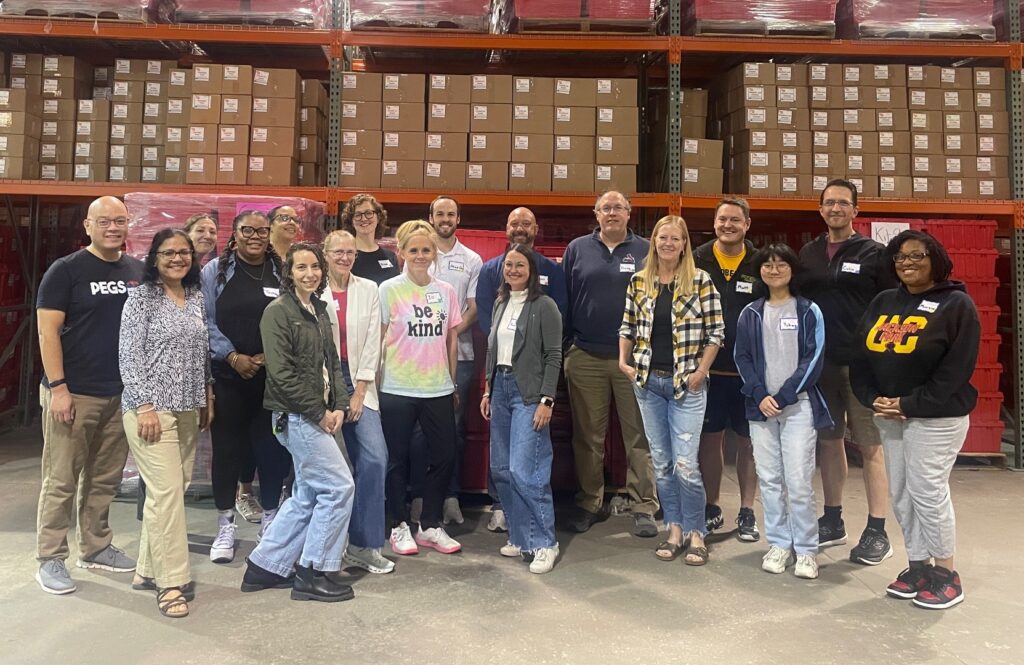
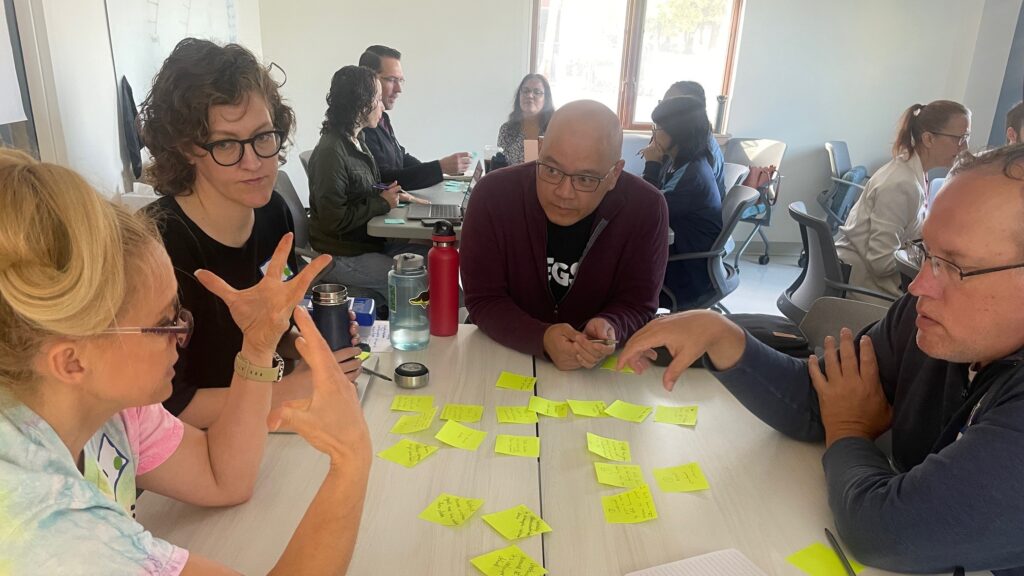
Critical to this nuanced discovery was a two-day design sprint held October 9-10 during which participants reviewed the listening session data, and guided by the ISP’s approach to problem-solving, uncovered pain points that could actually be addressed with a useful tool.
Yuhan Wu, a senior at Lindbergh High School, participated in both the listening sessions and the sprint. During the listening sessions, she and other students shared insights on their own use of AI, as well as concerns about teacher use. They expressed a desire for teachers to stay connected with student work, with one student adding, “If I write an essay, I definitely want my teacher to grade it, because I’ve put a ton of work into it.”
Wu uses AI herself, but primarily as an idea generator when she’s starting a writing assignment or for support practicing math problems. She recognizes that it comes with limitations and pitfalls.
“I think AI is an unavoidable part of the future, and students are the people who are going to be experiencing its effects the most. It’s best to start early to make sure it’s being used well.
Yuhan Wu, senior, Lindbergh High School
Wu is the manager for an AI citizenship project and involved in developing an AI literacy course for students at Lindbergh.
“I really wanted to see how the adults were thinking about AI and where we should focus or add elements to the citizenship course.”
One of those adults was Emily Williamson. She teaches middle school science in the Brentwood School District, but for this effort, was wearing her parent hat. Her children are in the seventh and ninth grades in the Maplewood-Richmond Heights School District.
“Most parents I know trust teachers,” she says. “We know they are professionals who know what they need to be doing. As a parent, I really want teachers to let me know if there’s something I can do to help with my children’s learning. Are there connections I could be making?”
Williamson, who uses AI herself and wants to know more, admits she can’t help but look at things with a teacher lens.
“I want to make sure it’s safe for students,” she says. “We don’t want students relying on AI too heavily. If there are ways to make teacher workflows easier, I’m interested, but it’s important to recognize that for most teachers, we don’t want just another tool that requires more of our time. If we end up with a tool that is easy to use and helps us meet students’ needs, that’s worth looking into.”
Williamson left the design sprint portion of the NSF project encouraged by one message that rose to the surface from the group loud and clear:
“Teachers want to teach. Parents want their kids to learn, and none of us want to take out the human connections that teachers make with students.”
Drilling down to the real problem
“Most standardized curricula are written for the average student,” says ISP Instructional Specialist Alex Gerber. “But learning gains are greater when teachers adapt curricular materials to meet individual student needs.”
Gerber is among the ISP researchers leading the NSF project and brings with him years of experience in curriculum development and professional learning for science educators. Working in classrooms and school buildings regularly, he knows that teachers also navigate an ever-present need to accommodate scheduling changes and other unpredictable factors from one lesson to the next.
“Curricular materials provide pacing guides and suggested supports to facilitate adaptation based on students’ needs, the student data needed by teachers to make decisions that benefit students effectively lives within other systems entirely. That’s a significant gap,” Gerber says. “With help from our educator experts, we’ve been able to uncover something really important. Teachers feel unable to integrate student, school and district-level information effectively and/or in time for day-to-day curriculum adaptations.”
Left unaddressed, the primary concern surfaced: without the time to individualize adaptations for all students, the focus will necessarily be on meeting the needs of those struggling the most, leading to adaptations that could reduce the rigor of the curriculum.
Communicating information about adaptations effectively to parents and students was another challenge that surfaced during the sprint phase.
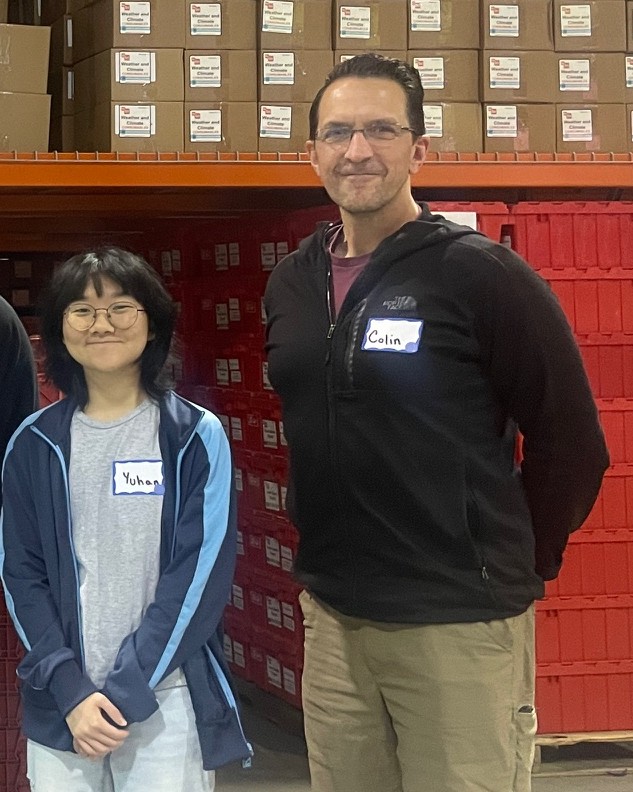
“Here’s another place where teachers struggle,” says Colin Davitt, director of artificial intelligence and blended learning for the Lindbergh School District. “What they are doing in the classroom is much more advanced, much more sophisticated. Teachers have better ways to reach students, but how do they articulate that to parents? How can we shift the burden so that doing something like writing a newsletter leaves teachers feeling energized instead of tired?”
Davitt has been part of the Lindbergh District for 26 years, as a teacher and later taking on technology roles. He serves on a number of board advisory committees, five in total, including an online group he helped start in 2023 called ShowMe:AI. The group connects 20 to 40 districts across Missouri monthly to work around the same goal: understanding what is happening at the intersection of AI and education.
“Being a modern citizen in today’s fast-paced environments, there is a level of responsibility for understanding how these tools work. Meeting around the same problem with people who are not like us gives us new perspectives and empathy. Whatever I thought we were going to build at the beginning of the design sprint will be a hundred times better because we’ve been given the space to solve with others,” Davitt says.
Healthy skepticism
Dan Maranan also wears two hats for the design sprint. As executive director of WashU’s Digital Intelligence & Innovation Accelerator (DI2), he’s been part of the effort from the beginning, leading the WashU team with technical expertise for designing a tool. That’s his official role, but he’s also a parent to three children in the Lindbergh District. He describes himself as somewhat of an AI skeptic.
“I don’t let my kids use AI,” Maranan says. “I want them to develop wisdom and judgement first. Eventually, they are going to have to learn AI, but there’s plenty of time. I think that AI has the potential to offload from students the things they need to develop critical thinking. That’s the thing I’m most afraid of. If we have AI relieving us of our cognitive abilities, it leads to the insidious use of technology. I want to be inside of these conversations. I want to get right in the middle of it, to make sure we use AI appropriately, and obviously, to protect kids.”
Maranan recognizes that people have strong feelings about AI.
The polarization is driven by fear. People don’t understand it. The only way to deal with fear is to get educated. If you are against it, make sure you understand what AI can and can’t do. Be part of the conversation.
Dan Maranan, executive director, WashU Digital Intelligence & Innovation Accelerator (DI2)
As he helps the design team narrow down the components of a tool that would be developed if funded for the next phase of the NSF project, he sees the complexity of the task at hand and where AI functionalities could help do some of the heavy lifting.
“We have a sea of data that we have to wrangle and help teachers make sense of it. AI is really good at aggregating and doing it sensibly, so that’s a good place to start,” he says. “One of the biggest things I heard during the first two phases of the project that I really liked was this: the best part of teaching wasn’t the subject matter. The teachers want to be empowered, engaged, and use tools to help them become more effective.”
The WashU team has submitted a proposal for the next phase of the NSF project: building the pilot tool. Ruggirello observes the value of the process that has unfolded thus far.
“Even more important than the development of this tool, or any tool, is the opportunity to bring together diverse stakeholders, including students themselves, who often don’t get the chance to talk to each other or influence larger educational decisions,” says Ruggirello. “This process has provided an invitation to have a voice in deciding how and whether these tools reflect their own values.”
Learn more about the ISP’s leadership in supporting educators with AI navigation.